Process
Optimizing the Structure of Your Trading Day
Most traders focus on setups while overlooking the structure behind their decisions. This lesson explains how organizing your trading day through preparation, execution, and journaling improves discipline and consistency. By building a repeatable process around mindset, execution, and review, traders can reduce impulsive decisions and focus on high quality opportunities.
Planning for the Upcoming Trading Day
The trading day does not start at market open. It starts in the day before, where the initial plan is set. When you have a defined move you are looking for in the market, there is an understanding of what must be demanded to validate a trade.
The preparation phase takes place after the market closes on the previous day to view the daily chart with the full daily closure. This is where you identify what the following day must do in order to provide a trade opportunity, if any.
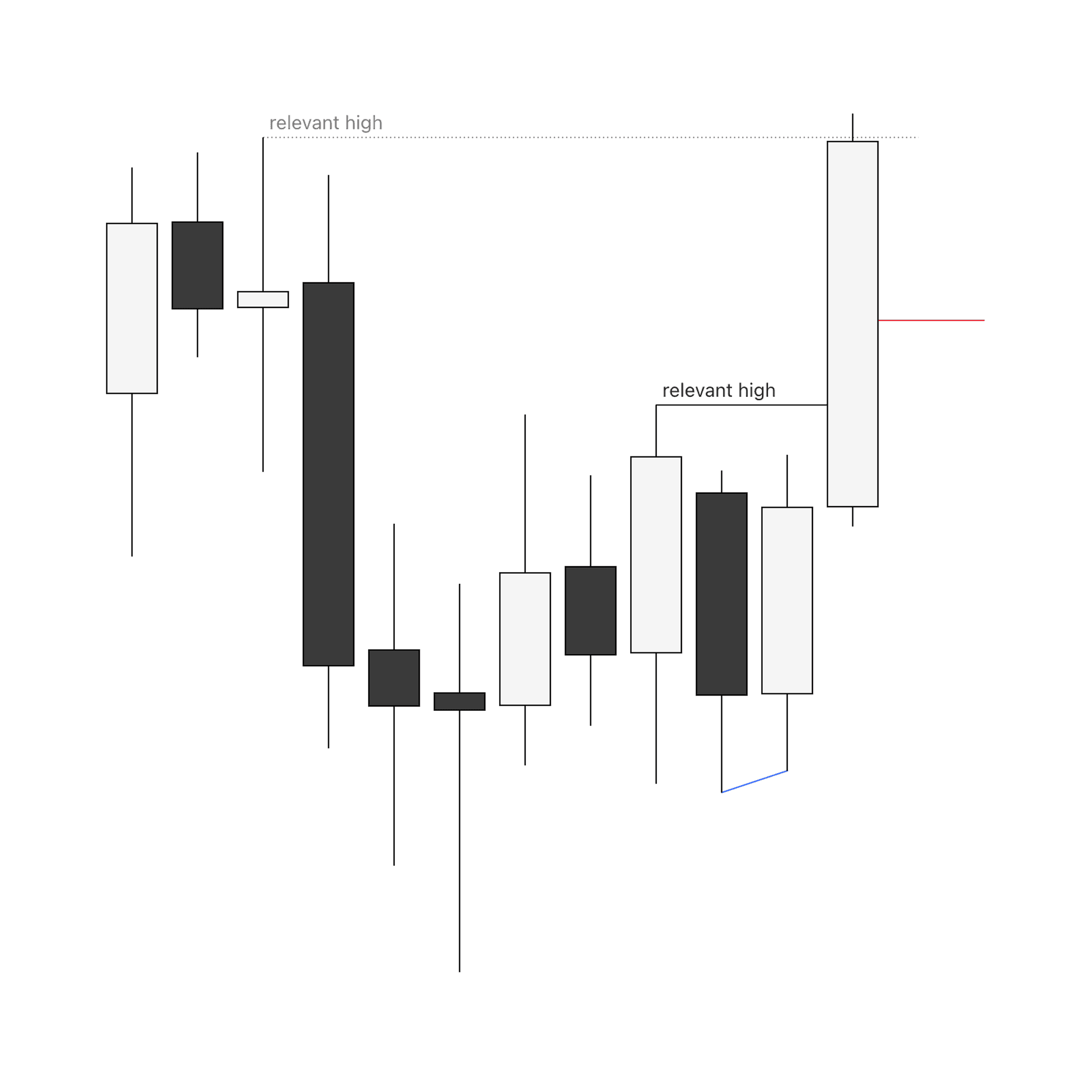
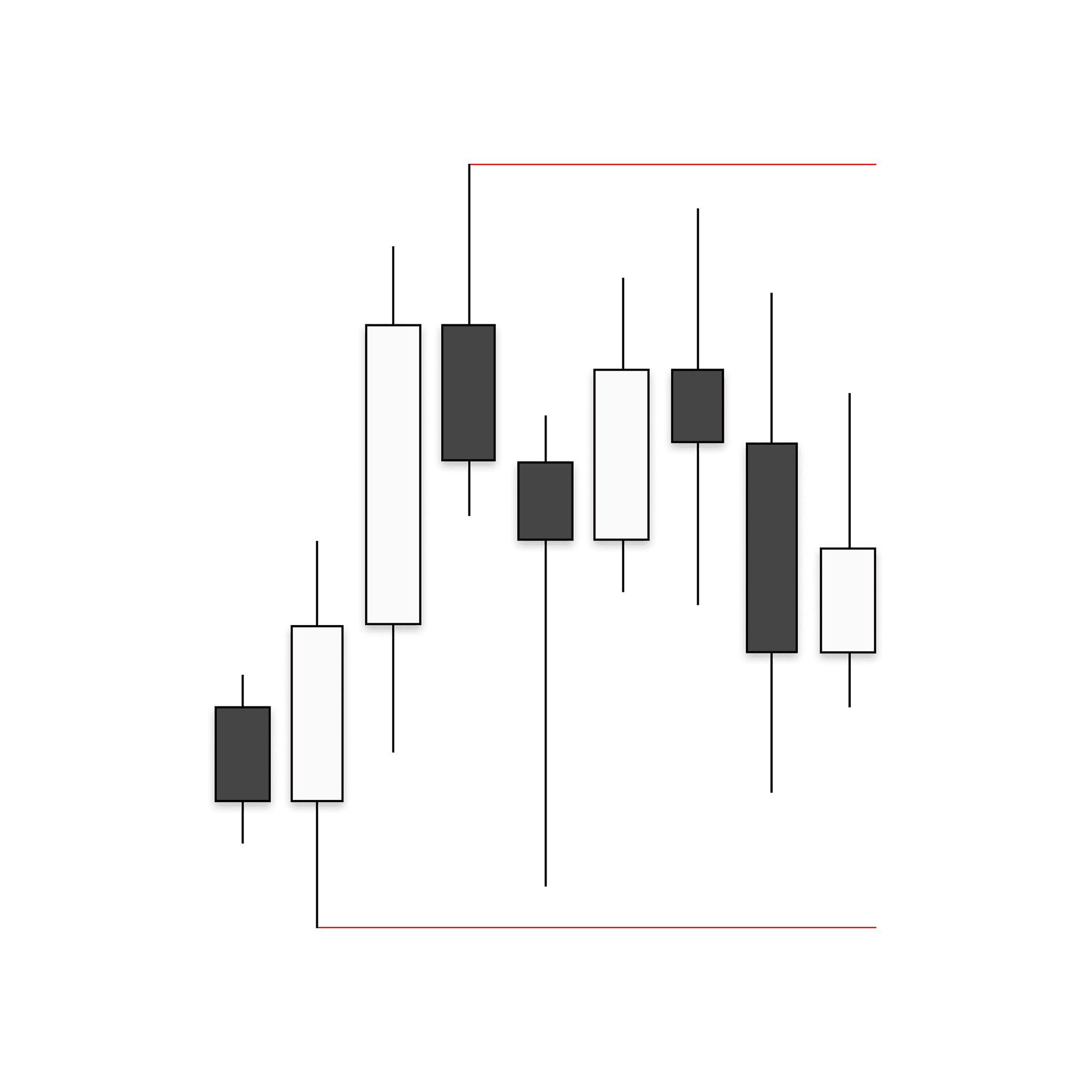
What does this look like in practice? The process behind it is simple. Using the daily chart below from a real trade example, the relevant swings show that there is a valid framework in the market.
Initial plan: If the daily profile develops bullish and remains in respect to the invalidation point, then I will focus on seeking entries in the continuation and filter out anything else. This is my ideal scenario for this framework.
Secondary plan: If the market develops bearish off the previous day high or trades through the invalidation point, then I will reassess the market from that point. I understand that price engaged a relevant high, so that means there is potential to trade the other side of the market even though it is not my initial focus.
The purpose is not to predict every movement of the market, but to define the circumstances under which you will participate. This added planning step creates clarity in your execution. When the market opens, you are no longer searching for opportunities randomly. Instead, you are waiting for price to align with the development that you already know provides a quality setup.
This preparation phase also allows you to determine whether the upcoming day is likely to present meaningful opportunity at all. Some days offer clear structure, while others will have no potential for a trade opportunity based on how the daily chart is positioned at that time. Recognizing that difference ahead of time prevents unnecessary screen time and impulsive decisions.
Executing Within the Current Trading Day
Once the trading session begins, your role shifts from analysis to execution. The most common mistake at this time is losing focus due to the movement of a live market. Traders remain zoomed in and chase any short-term move in price hoping to get onside. This is what we avoid doing inside of this structure.
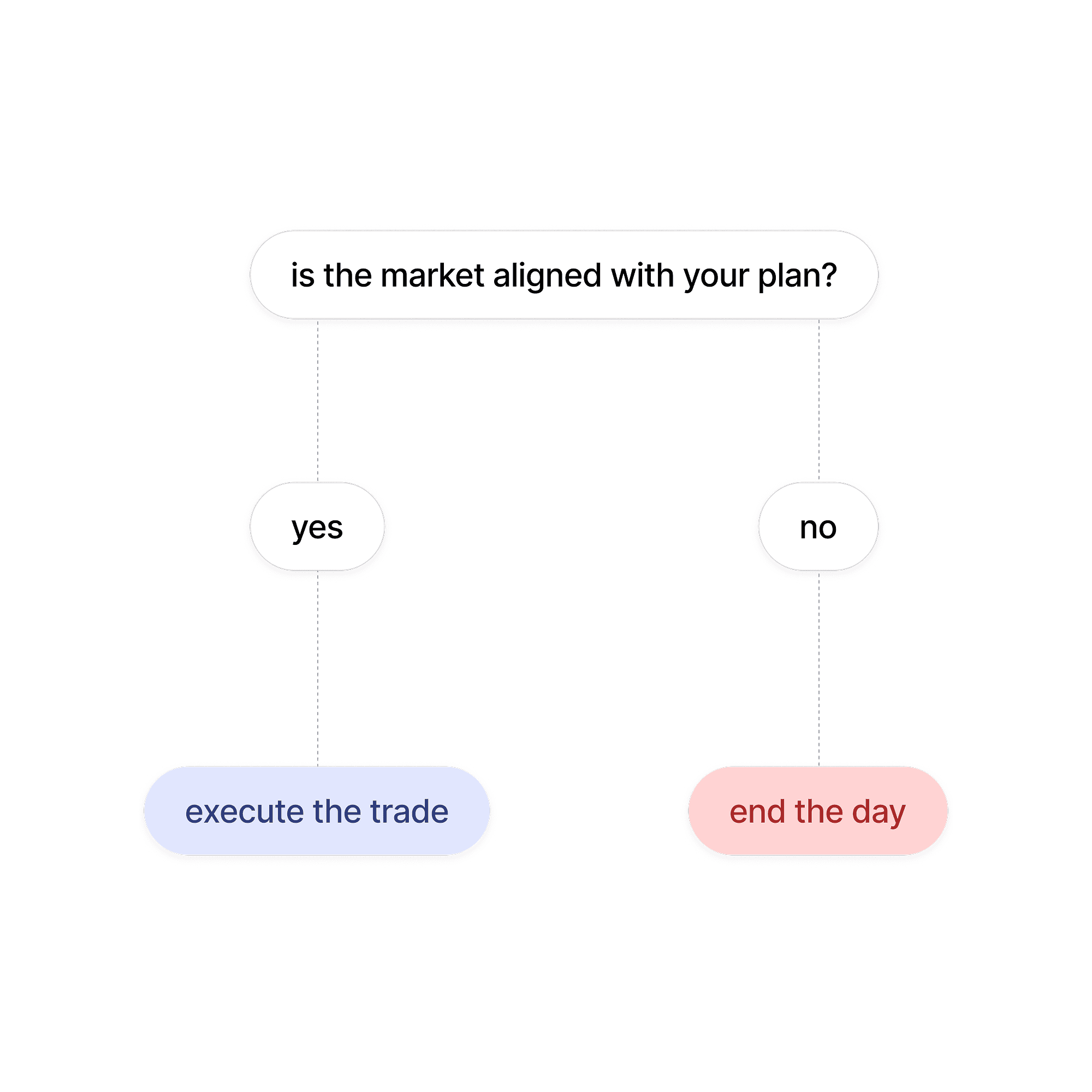
You already have a defined plan from the previous day. During the current session, your only job is to remain aligned with your system inside of that exact plan. Trading should not be treated as continuous activity that has no end point. It is a sequence of moments where the market either aligns with your plan or it does not. Nothing more or less.
If the conditions are met, execute the trade according to the model. If the conditions are not met, there is no need to remain engaged with the charts. Waiting for opportunities that were never part of the original plan introduces emotional decisions and breaks discipline.
Recognizing When the Day Is Invalid
One of the most important skills a trader can develop is understanding when the market does not support their approach. Not every day will provide opportunity. Some days will remain confined within narrow ranges as they develop, while others simply do not align with the required framework and can be disqualified the day before. Attempting to force trades during these conditions is what results in unnecessary losses.
A structured process allows you to invalidate the day early when the market fails to present the conditions you demand. Instead of continuing to watch the charts hoping something will appear or chasing random action, the session should be classified as inactive. This preserves your focus for the days when opportunity actually exists and allows the quality setups to compound.
Allowing the Market to Close and Repeating
There are only two outcomes to a trading session. Either a valid trade was executed, potentially even multiple, or the day was invalidated and no trades were placed. The next step is always to allow the current trading day to close. This is done for two reasons.
The first is that it gives you time to reset your mind and perspective from the earlier trading session. Our initial action is to look back to objectively review the plan and executions. The purpose of this review is not to judge the outcome of trades, but to evaluate whether the process was followed correctly. Key questions during this review include whether the initial plan was respected, whether trades were executed according to the model, and whether any impulsive decisions occurred during the session when it should have been passed on. This step is what makes you a better trader each day and also transitions naturally into preparation for the following day.
At this point, you will know what to improve on based on the review and can begin to plan for the next day with that at the top of mind. Use the most recent daily candle closure to begin establishing where the opportunity exists in the market for the following day.
You are left back at step one in the process. The feedback loop has closed and the new trading day begins.
An Overview of the Process to Follow
Plan: Use the daily chart and previous daily candle closure to determine where the opportunity exists for the following day. This begins with understanding how your system must print on the chart to provide a trade. You may find there is only one potential opportunity, maybe multiple, or even none. The baseline is that you have a plan.
Execute: With your plan from the day before, watch the developing market into the trading session to determine if it is actionable or invalidated. If the market is aligned with what you demand, then a trade can be placed. If the market is not in a framework to be traded, then the day is ended at that point with no further consideration.
Review: Wait until the trading session has passed to reset your perspective on the market and your previous decisions. Then look back on your plan and the actions you took alongside it. Review in order to find any areas to build and others to refine out. This stage ensures you become a better trader day over day.
Repeat: You are left back at step one where you begin to establish the plan for the following day. Only now, you are a more capable trader and can continue to grow as the execution and feedback loop go on.
Each day begins with preparation, moves into focused execution, transitions into disengagement once the opportunity window has passed, and concludes with a review that informs the next session. When you remove randomness and start operating with structure, it changes everything. You will start to take control of aspects you previously struggled with and find consistency in your actions. It is time to find out for yourself.
Prop
Learn
Explore mentorship with

AM and

TTrades
The standard of trading guidance

Prop
Learn
Get funded with the prop
firms I trade with
Use code AM for the best discount



Planning for the Upcoming Trading Day
The trading day does not start at market open. It starts in the day before, where the initial plan is set. When you have a defined move you are looking for in the market, there is an understanding of what must be demanded to validate a trade.
The preparation phase takes place after the market closes on the previous day to view the daily chart with the full daily closure. This is where you identify what the following day must do in order to provide a trade opportunity, if any.
What does this look like in practice? The process behind it is simple. Using the daily chart below from a real trade example, the relevant swings show that there is a valid framework in the market.
Initial plan: If the daily profile develops bullish and remains in respect to the invalidation point, then I will focus on seeking entries in the continuation and filter out anything else. This is my ideal scenario for this framework.
Secondary plan: If the market develops bearish off the previous day high or trades through the invalidation point, then I will reassess the market from that point. I understand that price engaged a relevant high, so that means there is potential to trade the other side of the market even though it is not my initial focus.
The purpose is not to predict every movement of the market, but to define the circumstances under which you will participate. This added planning step creates clarity in your execution. When the market opens, you are no longer searching for opportunities randomly. Instead, you are waiting for price to align with the development that you already know provides a quality setup.
This preparation phase also allows you to determine whether the upcoming day is likely to present meaningful opportunity at all. Some days offer clear structure, while others will have no potential for a trade opportunity based on how the daily chart is positioned at that time. Recognizing that difference ahead of time prevents unnecessary screen time and impulsive decisions.
Executing Within the Current Trading Day
Once the trading session begins, your role shifts from analysis to execution. The most common mistake at this time is losing focus due to the movement of a live market. Traders remain zoomed in and chase any short-term move in price hoping to get onside. This is what we avoid doing inside of this structure.
You already have a defined plan from the previous day. During the current session, your only job is to remain aligned with your system inside of that exact plan. Trading should not be treated as continuous activity that has no end point. It is a sequence of moments where the market either aligns with your plan or it does not. Nothing more or less.
If the conditions are met, execute the trade according to the model. If the conditions are not met, there is no need to remain engaged with the charts. Waiting for opportunities that were never part of the original plan introduces emotional decisions and breaks discipline.
Recognizing When the Day Is Invalid
One of the most important skills a trader can develop is understanding when the market does not support their approach. Not every day will provide opportunity. Some days will remain confined within narrow ranges as they develop, while others simply do not align with the required framework and can be disqualified the day before. Attempting to force trades during these conditions is what results in unnecessary losses.
A structured process allows you to invalidate the day early when the market fails to present the conditions you demand. Instead of continuing to watch the charts hoping something will appear or chasing random action, the session should be classified as inactive. This preserves your focus for the days when opportunity actually exists and allows the quality setups to compound.
Allowing the Market to Close and Repeating
There are only two outcomes to a trading session. Either a valid trade was executed, potentially even multiple, or the day was invalidated and no trades were placed. The next step is always to allow the current trading day to close. This is done for two reasons.
The first is that it gives you time to reset your mind and perspective from the earlier trading session. Our initial action is to look back to objectively review the plan and executions. The purpose of this review is not to judge the outcome of trades, but to evaluate whether the process was followed correctly. Key questions during this review include whether the initial plan was respected, whether trades were executed according to the model, and whether any impulsive decisions occurred during the session when it should have been passed on. This step is what makes you a better trader each day and also transitions naturally into preparation for the following day.
At this point, you will know what to improve on based on the review and can begin to plan for the next day with that at the top of mind. Use the most recent daily candle closure to begin establishing where the opportunity exists in the market for the following day.
You are left back at step one in the process. The feedback loop has closed and the new trading day begins.
An Overview of the Process to Follow
Plan: Use the daily chart and previous daily candle closure to determine where the opportunity exists for the following day. This begins with understanding how your system must print on the chart to provide a trade. You may find there is only one potential opportunity, maybe multiple, or even none. The baseline is that you have a plan.
Execute: With your plan from the day before, watch the developing market into the trading session to determine if it is actionable or invalidated. If the market is aligned with what you demand, then a trade can be placed. If the market is not in a framework to be traded, then the day is ended at that point with no further consideration.
Review: Wait until the trading session has passed to reset your perspective on the market and your previous decisions. Then look back on your plan and the actions you took alongside it. Review in order to find any areas to build and others to refine out. This stage ensures you become a better trader day over day.
Repeat: You are left back at step one where you begin to establish the plan for the following day. Only now, you are a more capable trader and can continue to grow as the execution and feedback loop go on.
Each day begins with preparation, moves into focused execution, transitions into disengagement once the opportunity window has passed, and concludes with a review that informs the next session. When you remove randomness and start operating with structure, it changes everything. You will start to take control of aspects you previously struggled with and find consistency in your actions. It is time to find out for yourself.
Planning for the Upcoming Trading Day
The trading day does not start at market open. It starts in the day before, where the initial plan is set. When you have a defined move you are looking for in the market, there is an understanding of what must be demanded to validate a trade.
The preparation phase takes place after the market closes on the previous day to view the daily chart with the full daily closure. This is where you identify what the following day must do in order to provide a trade opportunity, if any.
What does this look like in practice? The process behind it is simple. Using the daily chart below from a real trade example, the relevant swings show that there is a valid framework in the market.
Initial plan: If the daily profile develops bullish and remains in respect to the invalidation point, then I will focus on seeking entries in the continuation and filter out anything else. This is my ideal scenario for this framework.
Secondary plan: If the market develops bearish off the previous day high or trades through the invalidation point, then I will reassess the market from that point. I understand that price engaged a relevant high, so that means there is potential to trade the other side of the market even though it is not my initial focus.
The purpose is not to predict every movement of the market, but to define the circumstances under which you will participate. This added planning step creates clarity in your execution. When the market opens, you are no longer searching for opportunities randomly. Instead, you are waiting for price to align with the development that you already know provides a quality setup.
This preparation phase also allows you to determine whether the upcoming day is likely to present meaningful opportunity at all. Some days offer clear structure, while others will have no potential for a trade opportunity based on how the daily chart is positioned at that time. Recognizing that difference ahead of time prevents unnecessary screen time and impulsive decisions.
Executing Within the Current Trading Day
Once the trading session begins, your role shifts from analysis to execution. The most common mistake at this time is losing focus due to the movement of a live market. Traders remain zoomed in and chase any short-term move in price hoping to get onside. This is what we avoid doing inside of this structure.
You already have a defined plan from the previous day. During the current session, your only job is to remain aligned with your system inside of that exact plan. Trading should not be treated as continuous activity that has no end point. It is a sequence of moments where the market either aligns with your plan or it does not. Nothing more or less.
If the conditions are met, execute the trade according to the model. If the conditions are not met, there is no need to remain engaged with the charts. Waiting for opportunities that were never part of the original plan introduces emotional decisions and breaks discipline.
Recognizing When the Day Is Invalid
One of the most important skills a trader can develop is understanding when the market does not support their approach. Not every day will provide opportunity. Some days will remain confined within narrow ranges as they develop, while others simply do not align with the required framework and can be disqualified the day before. Attempting to force trades during these conditions is what results in unnecessary losses.
A structured process allows you to invalidate the day early when the market fails to present the conditions you demand. Instead of continuing to watch the charts hoping something will appear or chasing random action, the session should be classified as inactive. This preserves your focus for the days when opportunity actually exists and allows the quality setups to compound.
Allowing the Market to Close and Repeating
There are only two outcomes to a trading session. Either a valid trade was executed, potentially even multiple, or the day was invalidated and no trades were placed. The next step is always to allow the current trading day to close. This is done for two reasons.
The first is that it gives you time to reset your mind and perspective from the earlier trading session. Our initial action is to look back to objectively review the plan and executions. The purpose of this review is not to judge the outcome of trades, but to evaluate whether the process was followed correctly. Key questions during this review include whether the initial plan was respected, whether trades were executed according to the model, and whether any impulsive decisions occurred during the session when it should have been passed on. This step is what makes you a better trader each day and also transitions naturally into preparation for the following day.
At this point, you will know what to improve on based on the review and can begin to plan for the next day with that at the top of mind. Use the most recent daily candle closure to begin establishing where the opportunity exists in the market for the following day.
You are left back at step one in the process. The feedback loop has closed and the new trading day begins.
An Overview of the Process to Follow
Plan: Use the daily chart and previous daily candle closure to determine where the opportunity exists for the following day. This begins with understanding how your system must print on the chart to provide a trade. You may find there is only one potential opportunity, maybe multiple, or even none. The baseline is that you have a plan.
Execute: With your plan from the day before, watch the developing market into the trading session to determine if it is actionable or invalidated. If the market is aligned with what you demand, then a trade can be placed. If the market is not in a framework to be traded, then the day is ended at that point with no further consideration.
Review: Wait until the trading session has passed to reset your perspective on the market and your previous decisions. Then look back on your plan and the actions you took alongside it. Review in order to find any areas to build and others to refine out. This stage ensures you become a better trader day over day.
Repeat: You are left back at step one where you begin to establish the plan for the following day. Only now, you are a more capable trader and can continue to grow as the execution and feedback loop go on.
Each day begins with preparation, moves into focused execution, transitions into disengagement once the opportunity window has passed, and concludes with a review that informs the next session. When you remove randomness and start operating with structure, it changes everything. You will start to take control of aspects you previously struggled with and find consistency in your actions. It is time to find out for yourself.


Prop
Learn
Get funded with the prop firms I trade with
Use code AM for the best discount



Prop
Learn
Explore mentorship with
AM and
TTrades

Prop
Learn
Get funded with the prop firms I trade with
Use code AM for the best discount
Prop
Learn
Explore mentorship with
AM and
TTrades
Prop
Learn
Explore mentorship with
AM and
TTrades
The standard of trading guidance
Prop
Learn
Get funded with the prop
firms I trade with
Use code AM for the best discount
Prop
Learn
Explore mentorship with
AM and
TTrades
The standard of trading guidance
Prop
Learn
Get funded with the prop
firms I trade with
Use code AM for the best discount

Optimizing the Structure of Your Trading Day
Continue Learning.




© 2026 AM Trades. All Rights Reserved.
© 2026 AM Trades. All Rights Reserved.
© 2026 AM Trades. All Rights Reserved.